Summary
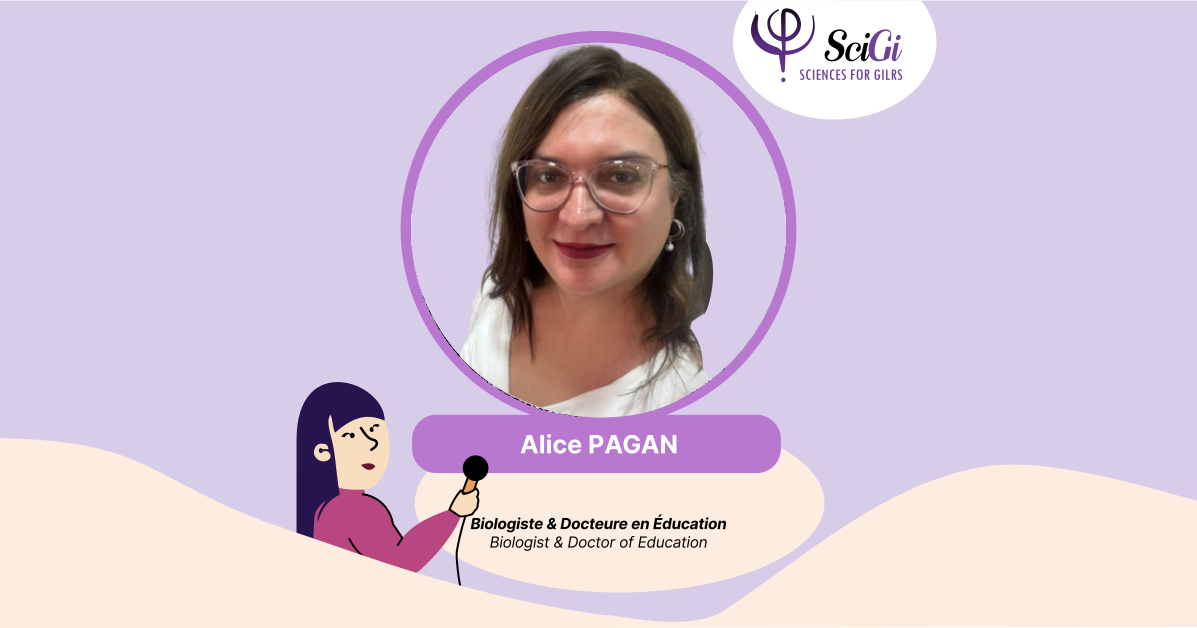
Inclusive science education… What if science wasn’t just about reason, but also about listening, care, and inclusion? Alice Pagan, a Brazilian university professor, scientist, and educator, embodies a revolutionary vision of science education. Her journey, marked by resistance, diversity, and transformation, shows how science can become a space for empowerment and innovation. Through her story, she inspires a new generation to rethink science as an act of imagination, solidarity, and social change. Discover how her pedagogical approach, rooted in empathy and equity, is redefining the boundaries of science education.
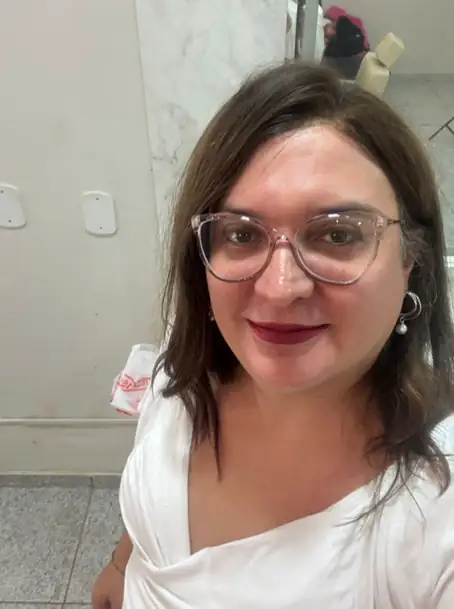
Alice Pagan
Source : Sciences for Girls
How did you become a scientist?
I grew up in Curvelândia, a small town in the interior of Mato Grosso, where opportunities in science were limited. As a child, I remember seeing films where characters were called “doctor.” I asked my mother what I had to do to become a doctor. She replied, with the naiveté of her reality, that I should study medicine or law, professions that, in Brazil, often guarantee social recognition. Yet, I was already passionate about science. I had set up a small laboratory in the garden of our house, where I made perfumes from essences. Everything ended up smelling like vanilla. I collected butterflies, planted seeds, and through these activities, I learned more about insects and plants.
At 14, I left my hometown to study and work in Cáceres. Today, I understand that this move was a form of diaspora, as I experienced a lot of harassment. Even without having transitioned and without knowing what it meant to be a trans person, I was already expressing a femininity that others wanted to see as masculine. In a larger city, this suffering lessened. I began a bachelor’s degree in biology at the State University of Mato Grosso (UNEMAT), at a time when the university was still under construction and academic research was rarely discussed.
In my fourth semester, I met a professor, Maria Cristina Mendes-Costa, who held a doctorate in genetics. The science she taught profoundly influenced me. Thanks to her and her husband, Professor Fernando Frieiro-Costa, I began to develop research projects, access bibliographies, participate in field trips, and become involved in a project on butterflies. It was at this time that I fell in love with the study of biological evolution. This path led me, ten years later, to defend my doctoral thesis at the University of São Paulo (USP), where I studied the relationship between evolution and creationism in the training of future biology teachers.
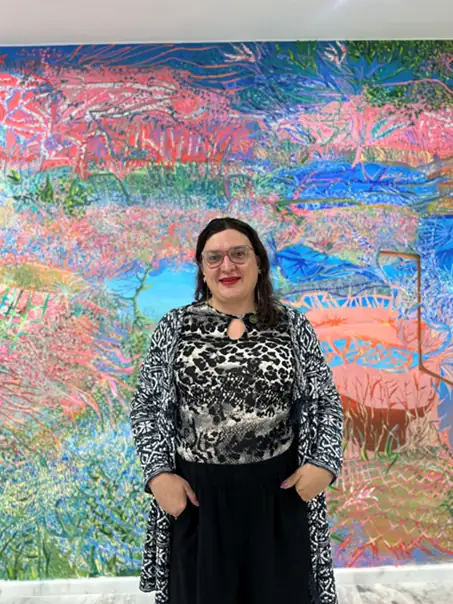
Alice Pagan
Source : Sciences for Girls
How did you become a teacher?
From a very young age, I envisioned myself as a teacher. My mother was a math teacher, and I used to play at giving lessons to the cupboards in the house, writing on them with chalk. Every passerby became my student in a game I had invented. Throughout my studies, I always worked part-time. At 19, I passed a competitive exam to become an administrative assistant in a hospital. At 23, I landed a job as a biologist at the Mato Grosso State Health Secretariat. I always managed to combine work and studies.
The doctorate, which I thought would be the end of my career, turned out to be just the beginning. After obtaining it, I took a competitive exam to become a university professor. I then began working in the field of science education, a field that perfectly matched my background, since I had a bachelor’s degree in biology and a doctorate in education.
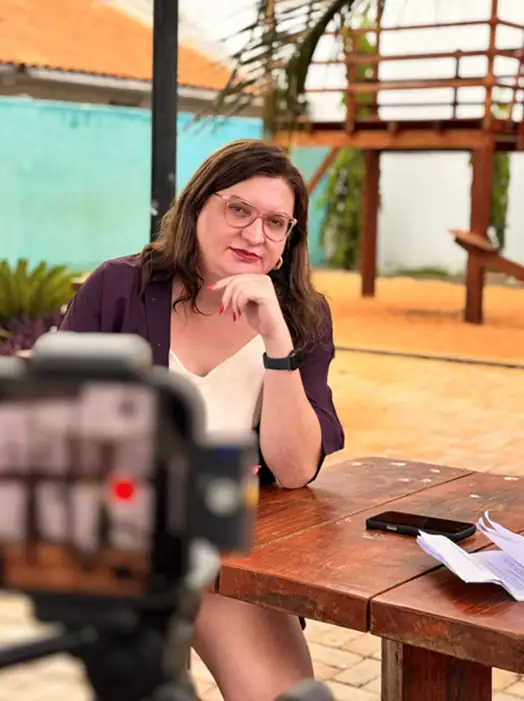
Alice Pagan
Source : Sciences for Girls
How does your experience as a trans woman influence your pedagogical approach to teaching science?
Being a trans doctor has given me powerful tools to resist heteronormative and cisnormative pressures in the scientific community. I became a university professor at 29 and transitioned at 35, after years of therapy and confronting internalized transphobia, but also thanks to the support of colleagues. Before my transition, my focus was on academic competitiveness. Afterward, I began to listen to myself more and to see science in a less binary way.
I came to understand the extent to which biology reflects cisgender and patriarchal projections, from the names of plants and animals to concepts like that of the “alpha male.” The entry of women into the study of primates has shown that these perspectives can evolve. Today, in my teaching, I challenge biomedical views that pathologize dissenting bodies. I advocate an inclusive approach that seeks equity among living beings and abandons normative projections onto nature.
How does your experience as a trans woman influence your pedagogical approach to teaching science?
Being a trans doctor has given me powerful tools to resist heteronormative and cisnormative pressures in the scientific community. I became a university professor at 29 and transitioned at 35, after years of therapy and confronting internalized transphobia, but also thanks to the support of colleagues. Before my transition, my focus was on academic competitiveness. Afterward, I began to listen to myself more and to see science in a less binary way.
I came to understand the extent to which biology reflects cisgender and patriarchal projections, from the names of plants and animals to concepts like that of the “alpha male.” The entry of women into the study of primates has shown that these perspectives can evolve. Today, in my teaching, I challenge biomedical views that pathologize dissenting bodies. I advocate an inclusive approach that seeks equity among living beings and abandons normative projections onto nature.
What strategies do you use to promote a more inclusive and critical learning environment regarding gender and diversity issues in science education?
My main strategy is listening. I advocate for a less belligerent and more diplomatic approach to science, one that doesn’t seek to dominate, but rather to teach students how to listen. In the classroom, I encourage students to listen to themselves, to others, and to the living world. In this way, I create a more inclusive and critical environment regarding issues of gender and diversity.
I work with affect as a feminist and transfeminist choice, understanding that reason and emotion are inseparable. There is no such thing as neutral science or teaching. I integrate activism and my teaching into different spaces, not as a battle, but as bridge-building. I also adopt a sensitive, psychological, and multi-species perspective, teaching how to learn with other living beings, not just about them. This broadens the ethical and pedagogical dimensions of science education.
Have you ever faced challenges or resistance in the school environment as a trans teacher? How have these experiences shaped your educational practice and your vision of science teaching?
I faced a great deal of resistance after my transition, ranging from colleagues denying my identity to a serious case of institutional transphobia, including verbal abuse and threats. I had to file a complaint and seek psychological support. It was a painful time, but also a time of rebuilding. Being a trans professor in Brazil requires developing daily survival strategies, because even the most basic spaces can be hostile.
At the same time, our bodies are political and challenge binary views of gender. I believe that prejudice stems from fear and a lack of self-knowledge. I continue to place my faith in education, science, and activism for inclusive public policies as paths to transformation.
How can your story inspire other girls to become interested in science?
Being a woman in science remains a major challenge, as the academic world is still marked by patriarchal values such as competitiveness and a supposed neutrality. It’s not about abandoning science, but about transforming it by valuing emotion, care, intuition, and an ethic of care.
The university is often an unhealthy environment, especially for women, who face harassment and exclusion. This reality is even more pronounced for trans women, who are largely excluded from the education system. My way of inspiring others is to exist as I am, to occupy spaces, and to fight for inclusive public policies. I believe in education and science as tools for transformation. I encourage women and dissenting individuals to occupy these spaces, to organize collectively, and to expand the possibilities for life and scientific production.