Summary
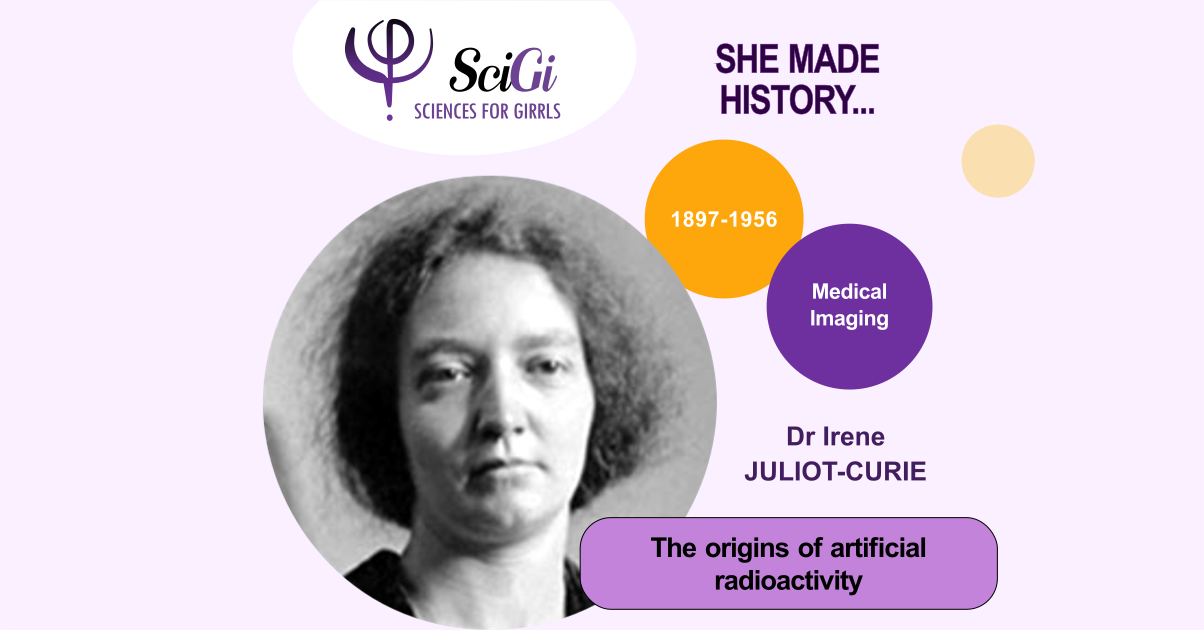
Irène Joliot-Curie, daughter of the legendary Marie Curie, made her mark on the history of science by discovering artificial radioactivity, an advance that revolutionized nuclear physics.
Her journey embodies the power of courage, curiosity, and perseverance in the face of the challenges of an era when female scientists had to fight for their place.
Even today, her legacy inspires thousands of young girls to pursue a scientific career, proving that passion can break down all barriers.
Irène Joliot-Curie not only left a scientific legacy, but she also demonstrated that women could excel in fields traditionally reserved for men. Her name, Irène Joliot-Curie, remains etched in the history of science.
Who was Irène Joliot-Curie? A childhood steeped in science
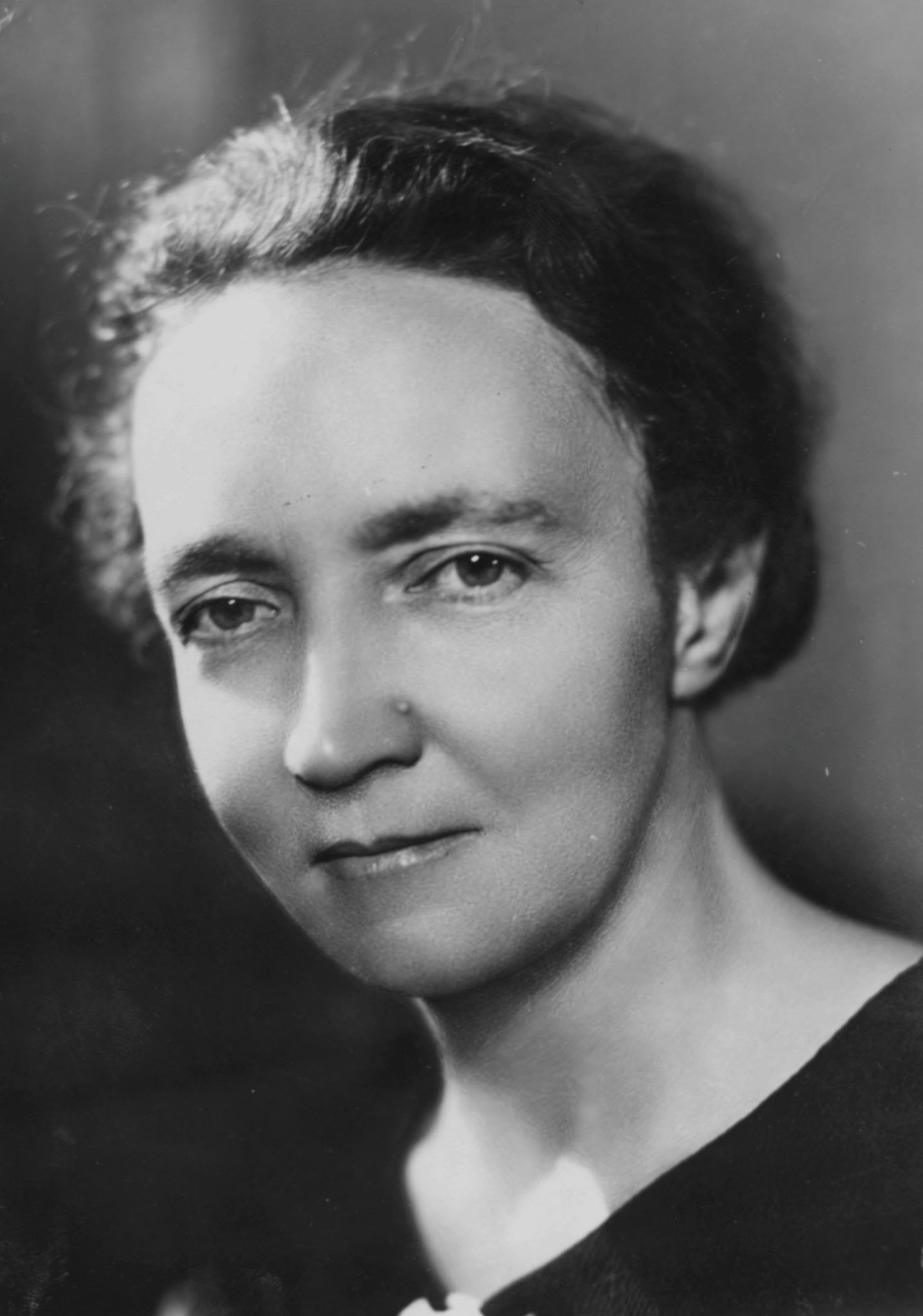
Source : Curie and Joliot-Curie Association
Irène Joliot-Curie (1897-1956) is an emblematic figure of French science, famous for her major contributions to physics and nuclear chemistry.. Daughter of Marie Curie et Pierre CurieShe grew up in a very rich scientific environment, where laboratories replaced traditional games. From a very young age, she had access to laboratories, intellectual debates, and experimental practices, which gave her an extremely rare cultural capital for a woman at the beginning of the 20th century. She learned to observe, experiment and reflect independently, thanks to an innovative education encouraged by his mother. This intellectual freedom forged his pioneering spirit and his ability to push the boundaries of knowledge.
The beginnings of an extraordinary scientific career
Upon entering the professional scientific field, Irène faced a male-dominated environment in which objectivity and rationality were associated with masculinity. Irène Joliot-Curie distinguished herself through her talent, rigor, and creativity.. She began her career in Parisian laboratories, where she quickly demonstrated an exceptional aptitude for research. Her meticulous work and determination laid the foundations for discoveries that would change the course of science.
The discovery that changed everything: artificial radioactivity
Among her many achievements, Irène Joliot-Curie demonstrated the importance of collaborative research, a fundamental aspect of her work with her husband, Frédéric Joliot-Curie.
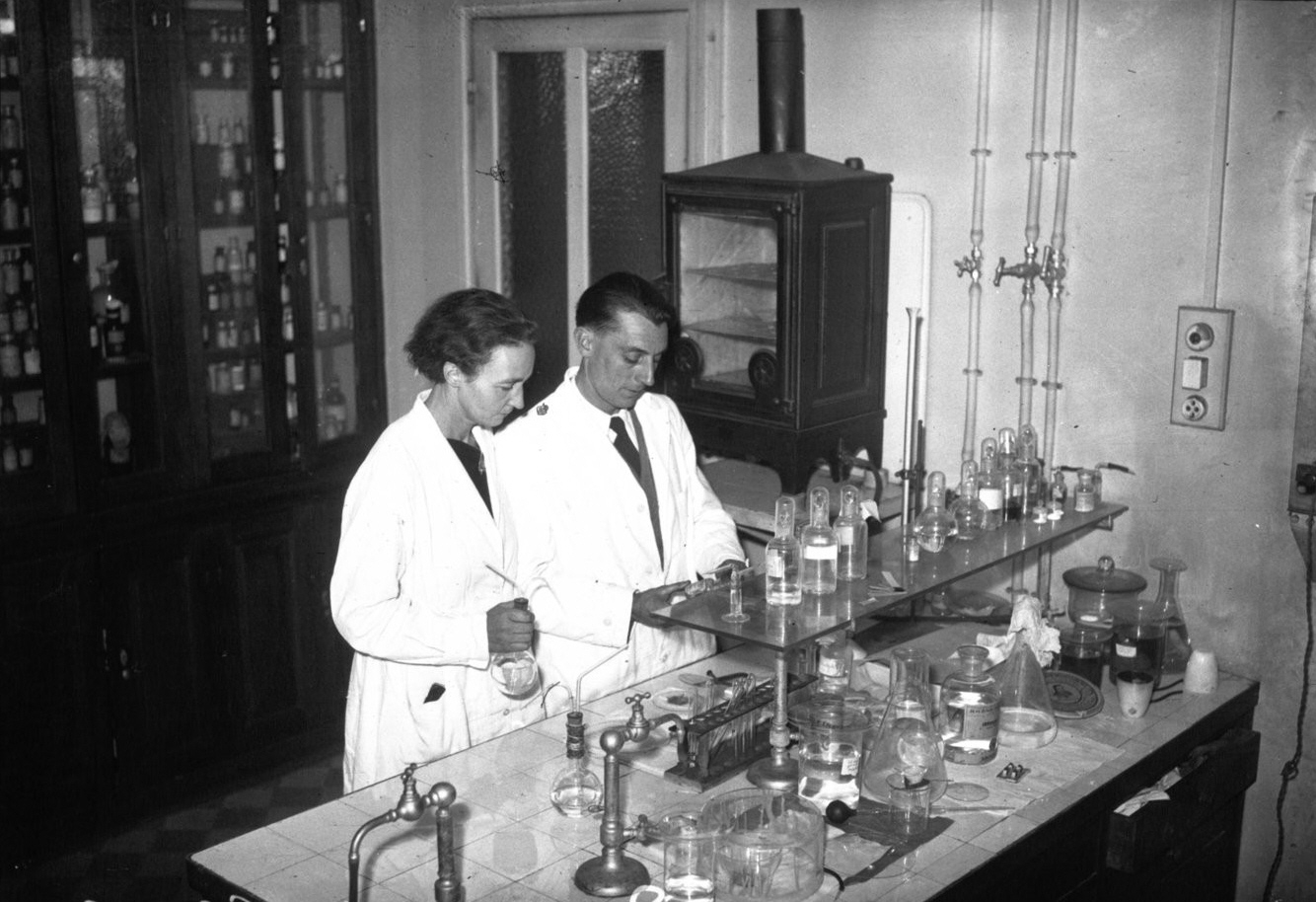
Irène and Frédéric Joliot-Curie working
Source : Wikipédia
Upon entering the professional scientific field, Irène faced a male-dominated environment in which objectivity and rationality were associated with masculinity. Irène Joliot-Curie distinguished herself through her talent, rigor, and creativity.. She began her career in Parisian laboratories, where she quickly demonstrated an exceptional aptitude for research. Her meticulous work and determination laid the foundations for discoveries that would change the course of science.
The discovery that changed everything: artificial radioactivity
In collaboration with her husband, Frédéric Joliot-Curie, Irène achieved a major scientific breakthrough: the transformation of a stable atom into a radioactive atom.. This discovery, known as artificial radioactivity, paved the way for revolutionary applications. It enabled the development of the nuclear medicine, particularly for cancer treatment, while offering significant advances in nuclear physics and fostering the emergence of new scientific technologies still used today.
For this exceptional contribution, the couple received the Nobel Prize in Chemistry in 1935.. However, despite this recognition, Irene had to face the persistent gender bias in the scientific world, proving that the road to equality is still long.
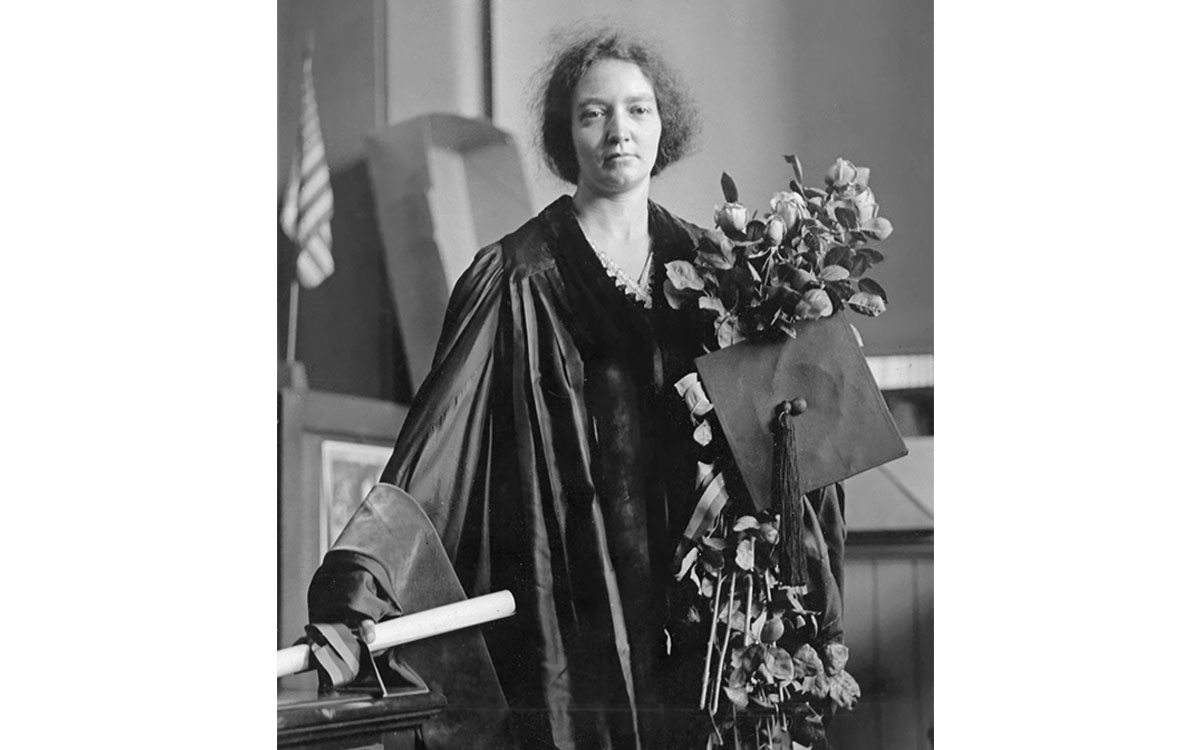
Irène Joliot-Curie gratuated
Source : City of Paris
A scientist committed to a better world
Irene went beyond her parents’ legacy by actively participating, as a protagonist, in European scientific policy. In the 1930s, she was actively involved in the anti-fascist movements and supported the French Popular Front. In 1936, she became undersecretary of State for Scientific Research, defending the idea that science should serve society. For her, scientists had a moral duty: to use their knowledge to improve the world and influence political and social decisions.
Motherhood, challenges and sacrifices: the price of scientific passion
Irene led an intense life, dividing her time between her family, her research, and her political activism. At a time when women were often confined to the home, she demonstrated that it was possible to reconciling motherhood and professional ambition. Irene had two children and had to reconcile scientific work, political activism and family life in a context that attributed to women an almost exclusive responsibility for care.
However, like her mother before her, Irene paid the price for her research. Prolonged exposure to radiation caused her to develop leukemia, a reminder that science, however noble, sometimes demands immense sacrifices.
Why Irène Joliot-Curie remains a timeless source of inspiration
The story of Irène Joliot-Curie is a symbol of hope for women in science. Her illustrious career the crucial importance of family support and a bold education to develop scientific potential. It also highlights the strength of courage and perseverance in the face of discrimination and challenges, as well as the unwavering commitment to science in the service of humanity, where every discovery must contribute to social progress.
Today, Irène Joliot-Curie remains an inspiring figure for young girls who dream of science. Her example proves that the talent, determination, and passion can triumph over the most stubborn obstacles, even in fields traditionally dominated by men.
Bibliography and sources
- Book: Irène Joliot-Curie: A committed woman of science – by Hélène Langevin-Joliot (her daughter).
- Scientific article: “The discovery of artificial radioactivity” – Nature magazine, 1935.
Irène Joliot-Curie also worked tirelessly to promote science and its impact on society, advocating for a future where science and humanity advance hand in hand.