Summary
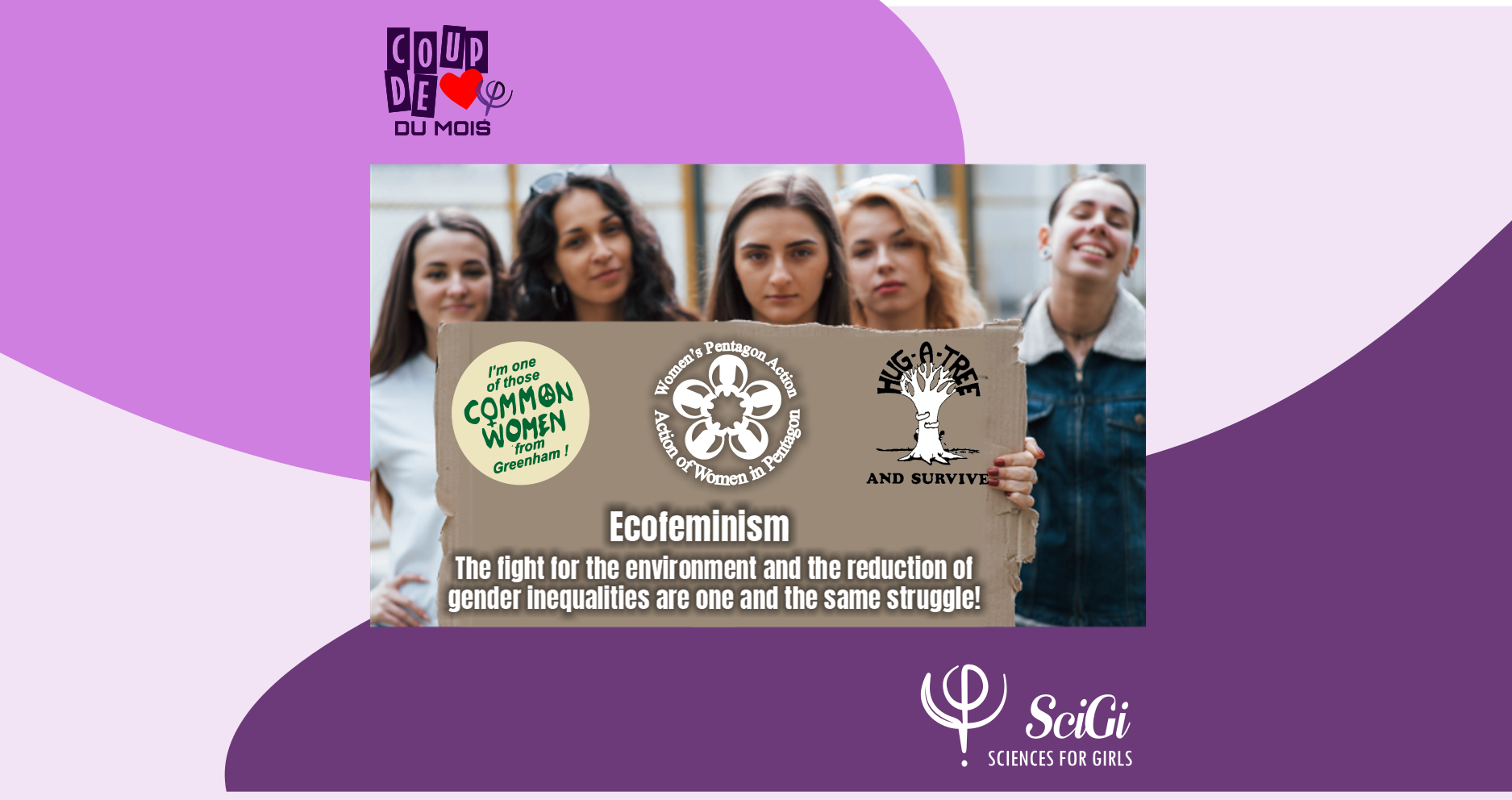
What if the key to saving the planet also lay in women’s emancipation? Since the 1970s, ecofeminism has embodied this revolutionary idea: the destruction of nature and the oppression of women share the same roots. This movement, born from the convergence of ecology and feminism, denounces a patriarchal and capitalist system that exploits both natural resources and women’s bodies. Through stories of emblematic struggles, portraits of inspiring women, and an analysis of contemporary issues, delve into the history and burning issues of ecofeminism, a fight that concerns us all.
Indeed, eco-feminism is a movement that merges ecological and feminist struggles, highlighting the importance of eco-feminism in our modern society.
Ecofeminism, Origins of ecofeminism, Link between feminism and ecology, Françoise d’Eubonne, Vandana Shiva, Wangari Maathai, Ecofeminism today, Capitalism, patriarchy and ecology, Ecofeminist actions
For several decades, a bold and necessary concept has been gradually establishing itself in social and environmental debates: eco-feminism.
This movement, which emerged in the 1970s, offers a radical and unifying vision, asserting that the fight for environmental preservation and the fight for gender equality are one and the same. Ecofeminism does not simply juxtapose these two causes; it reveals their profound connections, their common roots, and their shared solutions.
The principles of eco-feminism remind us that the fight for gender equality and the protection of our planet are inextricably linked.
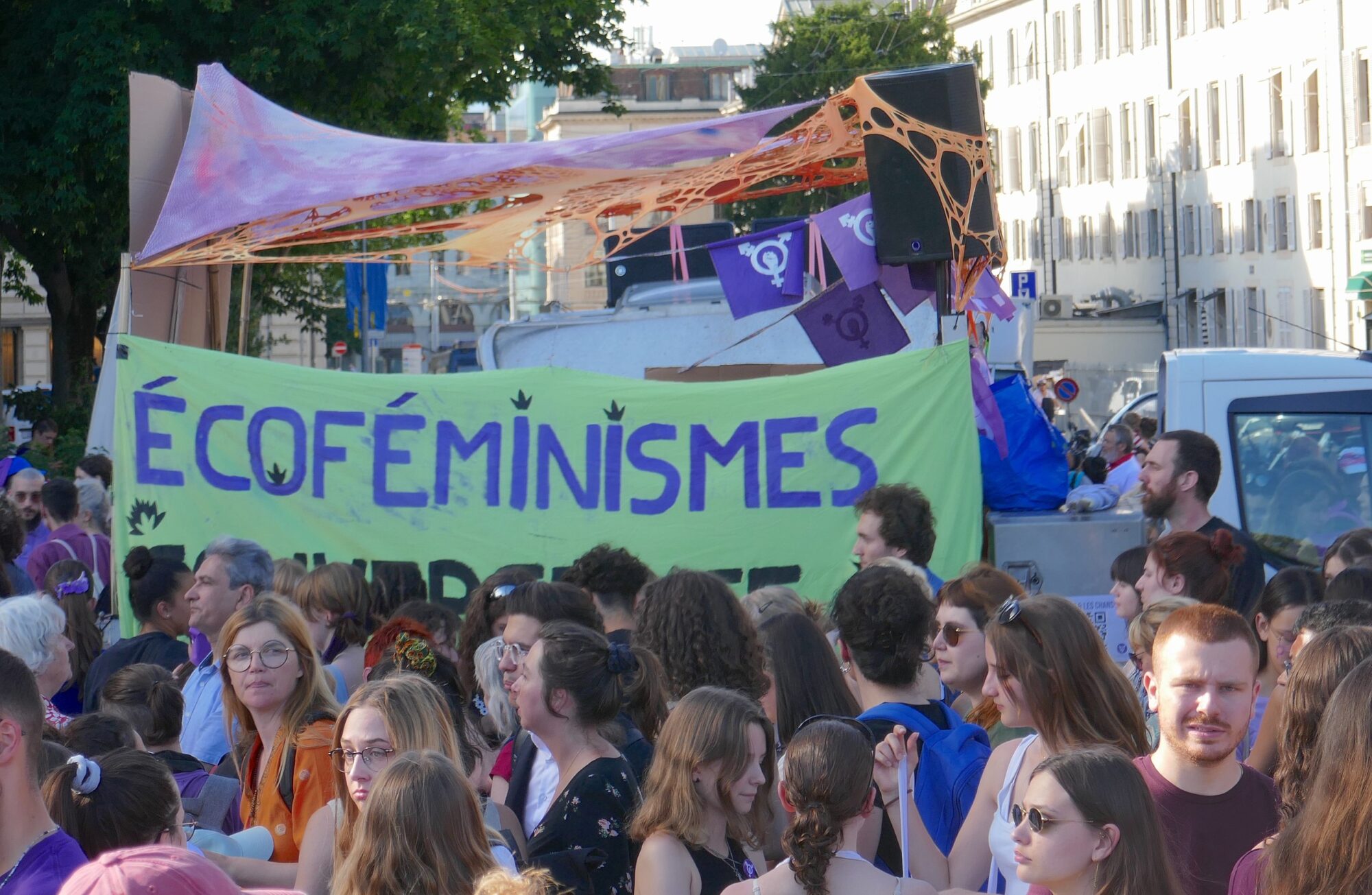
Demonstration on Saturday, April 9, 2022 in Geneva, for a “massive reduction in working hours”, under the banner of the convergence of struggles: climate, women, unions
Source : https://journalmamater.fr/
Ecofeminism, Origins of ecofeminism, Link between feminism and ecology, Françoise d’Eubonne, Vandana Shiva, Wangari Maathai, Ecofeminism today, Capitalism, patriarchy and ecology, Ecofeminist actions
Ecofeminism, Origins of ecofeminism, Link between feminism and ecology, Françoise d’Eubonne, Vandana Shiva, Wangari Maathai, Ecofeminism today, Capitalism, patriarchy and ecology, Ecofeminist actions
Ecofeminism, Origins of ecofeminism, Link between feminism and ecology, Françoise d’Eubonne, Vandana Shiva, Wangari Maathai, Ecofeminism today, Capitalism, patriarchy and ecology, Ecofeminist actions
Ecofeminism, Origins of ecofeminism, Link between feminism and ecology, Françoise d’Eubonne, Vandana Shiva, Wangari Maathai, Ecofeminism today, Capitalism, patriarchy and ecology, Ecofeminist actions
The beginnings of an ecological and feminist awareness
It all began in 1972 with the publication of the “Meadows Report”, entitled “The Limits to the Relationship with Growth”. This document, prepared by MIT researchers, sounds the alarm: economic and demographic growth cannot be infinite. Natural resources are dwindling, and a shortage is expected by 2020-2030. This report marks a turning point in global ecological awareness. It is in this context of questioning the dominant model that ecofeminism is emerging, driven by women who perceive the parallels between the exploitation of the Earth and the exploitation of their own bodies.
The official birth of a committed term
The term “ecofeminism” was first used in 1974, by Françoise d’Eubonne.French activist and writer. In her work “Feminism or Death”She establishes a direct link between the exploitation of the planet and the oppression of women, both orchestrated by a patriarchal and capitalist system. Françoise d’Eubonne denounces a logic of domination which, according to her, threatens both the ecological balance and the emancipation of women.
Even before the term became established in France, similar movements were emerging around the world. United States, England, Kenya, and JapanWomen are organizing to defend both the environmental cause and women’s rights. These initiatives, although scattered, share the same intuition: women’s liberation and the preservation of nature are two sides of the same coin.
The 3 founding movements of eco-feminism
The Chipko Movement: when women hugging trees became a symbol
In 1973, in the foothills of the Himalayas in India, the Chipko movement was born. This popular uprising, led primarily by women, aims to protect forests from massive deforestation. Chipko women oppose the dominant castes and the patriarchal system, which prioritize immediate profits over the health of ecosystems. Their method of resistance, “Hug The Tree” has become a global symbol of the non-violent struggle for environmental justice.
Decades later, in April 2022, a demonstration in Geneva called for a “massive reduction in working hours” This illustrates the persistence of this convergence of struggles. Thousands of people, the majority of them women, march to denounce a government that is destructive to nature and a patriarchal system that perpetuates inequality. This is the work of the Indian author and activist. Vandana Shiva, who would later describe the Chipko movement as ecofeminist, thus highlighting its importance in the history of this struggle.
The Greenham Common Peace Camp: Nineteen Years of Feminist and Anti-Nuclear Resistance
In 1979, at the height of the Cold War, NATO decided to install nuclear missiles in Europe, notably at the Greenham Common military base.In England. In response, 36 women begin a march from Cardiff all the way to the base. Ignored by the authorities, they decided to chain themselves to the fences and set up camp there. During For nineteen years, from 1981 to 2000, this peace camp became a symbol of ecofeminist resistance, blending pacifism, feminism and ecology.
The Women’s Pentagon Action: art in the service of denouncing patriarchal and nuclear violence
In 1979, a nuclear accident occurred at the Three Mile Island power plantIn the United States, it causes an environmental catastrophe. In response, women mobilize against nuclear power and found, in 1980, le Women’s Pentagon Action. In front of the Pentagon, they used art, dance, and puppetry to denounce violence against women and the ravages of war and nuclear weapons. This action, both poetic and political, marked the emergence of ecofeminism in the United States.
Contemporary challenges of eco-feminism

Ecofeminism, Origins of ecofeminism, Link between feminism and ecology, Françoise d’Eubonne, Vandana Shiva, Wangari Maathai, Ecofeminism today, Capitalism, patriarchy and ecology, Ecofeminist actions
In 1980, 2,000 women from Women’s Pentagon Action demonstrated in front of the Pentagon, dancing with puppets and holding a banner that read “Women Against the Pentagon.”
Credit: Henri, Diana Mara
Source : https://www.hellocarbo.com
Eco-feminism in France: a reintroduction through writings and ideas
Although these movements contributed to the emergence of ecofeminism on a global scale, it is thanks to the writings of Vandana Shiva and the German sociologist Maria Mies that this concept was reintroduced in France in the 1990s. Their work “Ecofeminism”, published in 1993This book offers an in-depth reflection on the links between patriarchy, capitalism, and environmental destruction. It has become an essential reference for activists and researchers in France and around the world.
Understanding eco-feminism: an analysis of structural causes
Ecofeminism is based on a powerful and transformative idea: environmental destruction and gender inequality share the same structural causes.. These causes are the capitalism, patriarchy, and colonialism.
According to the philosopher Jeanne Burgart Goutal, ecofeminism refers to a profound interconnection between ecology and feminism. These are not two separate struggles, but a single movement taking different forms. On one hand, the capitalist system exploits natural resources and labor to maximize profits. On the other, the patriarchal system establishes a hierarchy of genders, favoring male domination. Ecofeminism asserts that these two forms of domination are intimately linked and that they oppress in the same way. Nature and women.
Why are women on the front line in the face of environmental crises?
In many countries, particularly in Africa, women bear a major responsibility for providing food, water, and fuel. They produce up to 80% of food products in developing countries. When resources become scarce due to climate change, it is women who must travel longer distances and redouble their efforts to provide for their families. This reality exacerbates gender inequalities and makes women even more vulnerable to environmental crises.
However, women are not just victims: they are also agents of resilience. As farmers, they develop sustainable agricultural techniques, manage soils organically, and lead reforestation projects. Their expertise and commitment demonstrate that there is a direct correlation between nature conservation and gender equality. The fight for ecology is useful to the cause of women, and vice versa.
These 5 inspiring women who have marked the history of eco-feminism
The eco-feminist movement has been able to adapt and evolve, attracting new voices that carry the torch of eco-feminism around the world.
Eco-feminist initiatives continue to flourish, providing innovative solutions to the ecological and social crises we face.
Ecofeminism, Origins of ecofeminism, Link between feminism and ecology, Françoise d’Eubonne, Vandana Shiva, Wangari Maathai, Ecofeminism today, Capitalism, patriarchy and ecology, Ecofeminist actions
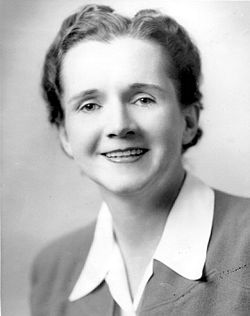
Rachel CARLSON
(1900-1964)
Source : https://upload.wikimedia.org

Françoise D’EUBONNE
(1920-2005)
Source : https://causonsfeminisme.com

Wangari MAATHAI
(1940 – 2011)
Source : https://upload.wikimedia.org

Marias MIES
(1931-2023)
Source : https://upload.wikimedia.org

Karen J. WARREN
(1947-2020)
Source : https://cdn.psychologytoday.com
Ecofeminism, Origins of ecofeminism, Link between feminism and ecology, Françoise d’Eubonne, Vandana Shiva, Wangari Maathai, Ecofeminism today, Capitalism, patriarchy and ecology, Ecofeminist actions
Rachel Carson (1907-1964): the biologist who awakened ecological awareness
Born in 1907 in Springdale, Pennsylvania, Rachel Carson she developed a passion for nature at a very young age. She studied biology and zoology and published several scientific works, including “The Life of the Ocean” (1941), “This Sea That Surrounds Us” (1951) and “The Wonders of the Sea and its Shores” (1955). But it’s in In 1962 she made history with “Silent Spring”, a book that denounced the dangers of pesticides and their devastating impact on biodiversity and human health.
Despite attacks and attempts to discredit her, her work led to the banning of DDT, a highly toxic pesticide, in the United States. “Silent Spring” is now considered one of the founding texts of the environmental movement and ecofeminism.
Françoise d’Eubonne (1920-2005): the activist who gave a name to ecofeminism
Born in 1920, Françoise d’Eubonne became involved very early in the fight for gender equality. In 1970, she founded the Women’s Liberation Movement (MLF) and, in 1978, she created the “Ecology/Feminism” association.. His work “Feminism or Death,” published in 1974, popularized the term “ecofeminism” and established a striking parallel between the overexploitation of the environment and the oppression of women.
In it, Françoise d’Eubonne denounces a system that, by destroying the planet and imposing uncontrolled population growth, threatens all of humanity. Her struggle and her ideas continue to inspire eco-feminist activists around the world.
Wangari Maathai (1940-2011): The woman who replanted Africa
Born in 1940 in Kenya, Wangari Maathai is the first African woman to receive the Nobel Peace Prize.. After studying biology in the United States, she returned to her native country and founded, in the years 1970, the “Green Belt Movement”, a reforestation movement that has enabled the planting of tens of millions of trees in Africa.
Her commitment to ecology, democracy and peace has earned her international recognition. She has become a major figure in ecofeminism, demonstrating that the restoration of ecosystems and the emancipation of women are two complementary struggles.
Maria Mies (1931-2023): the sociologist who theorized the links between patriarchy and the environment
Born in 1931, Maria Mies is a German sociologist whose work focuses on the intersections between patriarchy, poverty, and the environment.. She is particularly interested in theIndia and the effects of colonization and the subordination of women. In 1993, she co-authored with Vandana Shiva the book “Ecofeminism”, which analyzes what she calls “socioeconomic and technological patriarchal despotism”.
Her research shows how systems of domination exploit both women and nature, and offers avenues for building a more just and sustainable world.
Karen J. Warren (1947-2020): the philosopher who illuminated the mechanisms of domination
Karen J. Warren, an American philosopher, has devoted her career to studying the links between environmental ethics, feminism, and critical thinking.. In her article In “The Power and the Promise of Ecological Feminism,” she explains how the justifications for the domination of women and nature are based on similar logics.
His work has enriched environmental philosophy and continues to inspire researchers and activists who are fighting for a more equitable world.
Ecofeminism today: a struggle that is still relevant and necessary
Although ecofeminism remains largely invisible in political debates, it is gaining influence thanks to figures like Delphine Batho and Sandrine Rousseau. She explains that “The idea is to challenge the three-pronged approach that currently underpins our society: take, use, discard. We do this for nature, we do this for women’s bodies, and for many other people in society who are in precarious or vulnerable situations.” For her, change can only happen if this systemic violence is fought.
A movement that resonates with contemporary struggles
Recent events, such as the #MeToo movement, anti-nuclear groups, and climate marches, resonate with ecofeminist thought. Public speaking out against injustices and inequalities is increasing. For ecofeminists, it is clear that without the emancipation of women, the preservation of nature is in danger.
Conclusion: a call for collective action for a just and sustainable future
Ecofeminism is a recent but powerful movementwhich tends to develop throughout the world. It reminds us that the fight for ecology and the fight for gender equality are inseparable. By drawing inspiration from iconic figures and founding movements, everyone can contribute to building a better world. fair, sustainable and supportive.
And you, how will you get involved in eco-feminism?
Within the framework of eco-feminism, it is essential to recognize how women, as guardians of the earth, play a crucial role in preserving the environment.
Ecofeminism, Origins of ecofeminism, Link between feminism and ecology, Françoise d’Eubonne, Vandana Shiva, Wangari Maathai, Ecofeminism today, Capitalism, patriarchy and ecology, Ecofeminist actions
The struggle for eco-feminism is a struggle for social justice, equality and sustainability.